ND filters (Neutral Density filters) are probably one of the hardest accessories to choose for landscape and photography enthusiasts: square or circular? How many stops for daytime waterfall shots? Fixed ND or Variable ND — which is worth buying? This article helps you sort through all these choices at once.
I. What exactly does a ND filter do?
A ND filter is like putting "sunglasses" on your lens. It evenly reduces the light entering the lens without changing colors or requiring adjustments to shutter speed and aperture. Core uses:
- Long exposure: Creating a misty effect on flowing water or silky, streaked clouds during the day
- Large aperture needs: Shooting portraits/video at f/1.8 on sunny days — when the shutter speed can't go fast enough, use an ND filter to reduce exposure
- Video exposure control: Maintaining cinematic shutter speeds like 1/50s
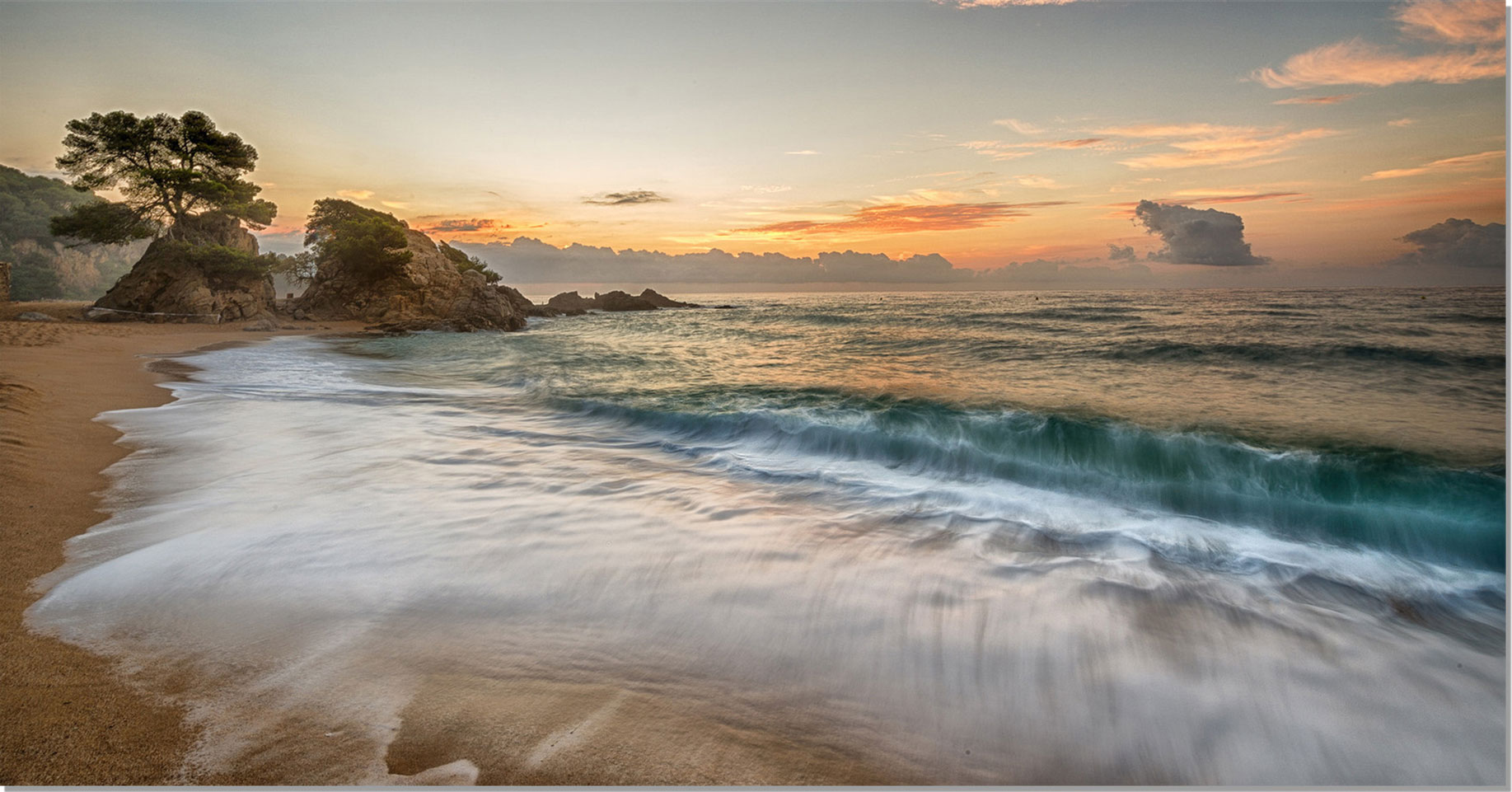
Before buying, clarify your primary use - this directly determines all subsequent choices.
II. Square Filters vs. Circular Filters
Circular ND Filter (screws onto lens front)
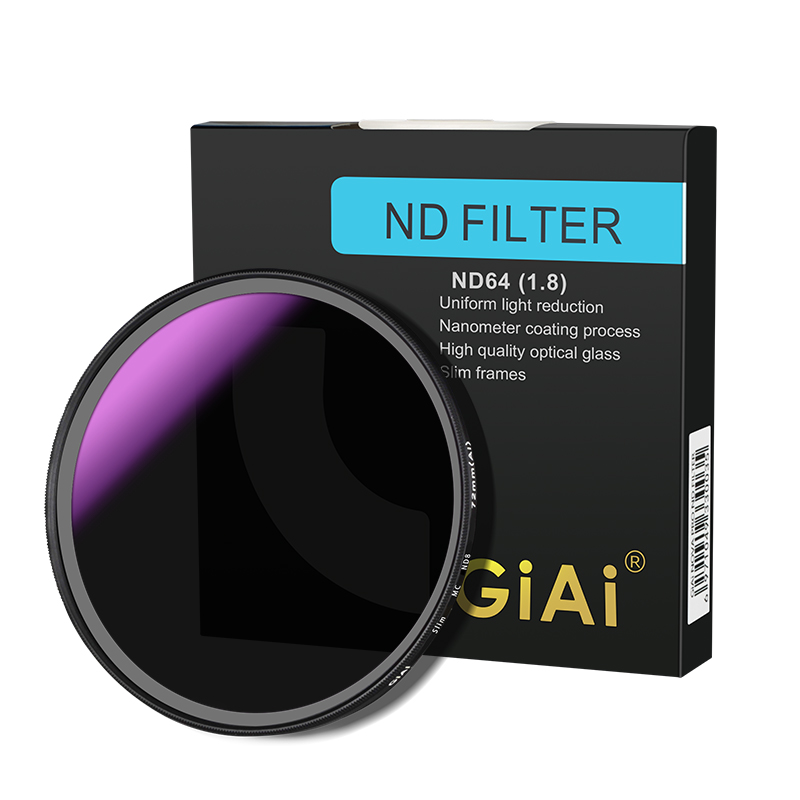
Pros:
- Affordable, low entry cost
- Compact, easy to carry, screw on and go
- Good sealing, low risk of light leakage, no flare issues at seams
- Virtually no extra maintenance needed
Cons:
- Filter thread size issue: Different lenses have different diameters — either buy multiple filters or use step-up rings (which may cause vignetting)
- Hard to stack: Want to combine ND + graduated filter? Nearly impossible
- Thick filters on wide-angle lenses easily cause vignetting
Square ND Filter (slot-in, used with filter holder)
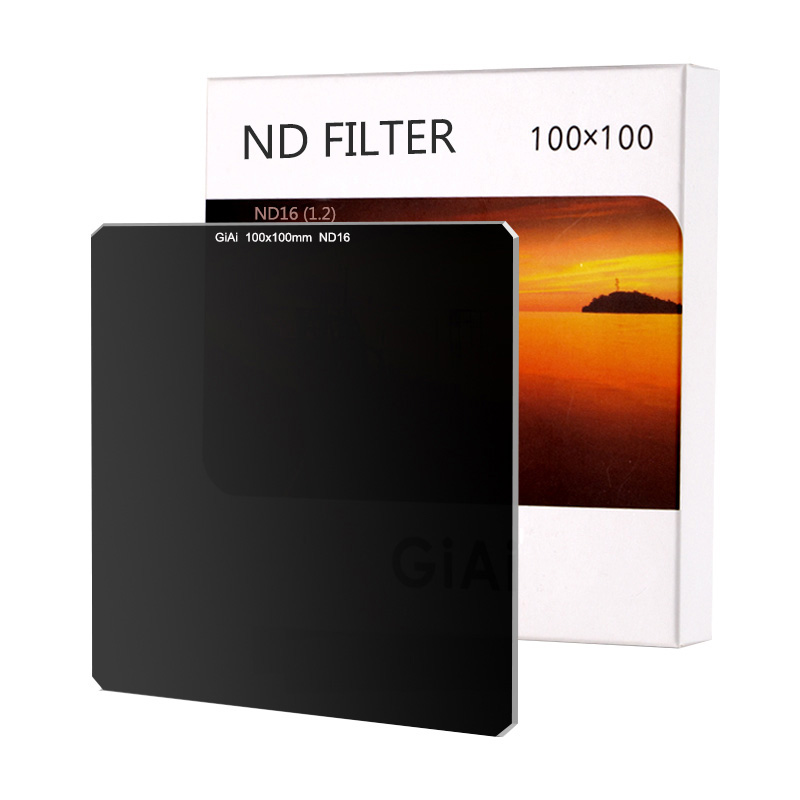
Pros:
- One filter holder works with all lenses — just swap adapter rings when changing lenses, saving money long-term
- Free combination: ND + Graduated ND (GND) + CPL in any arrangement
- Convenient composition: Move the GND transition line up and down to match the horizon
- Ultra-wide angles less prone to vignetting
Cons:
- High initial investment: Filter holder + adapter rings + filters
- Bulky, cumbersome to carry, time-consuming to set up
- Prone to dust, requires frequent cleaning
- Holder edges may leak light (especially with very dense ND filters)
How to choose?
| Your Situation | Recommendation |
|---|---|
| Occasional long exposure, single lens user, limited budget | Circular ND |
| Mainly landscape photography, multiple lenses, frequently stacking GND+ND | Square filter system |
| Video shooter needing quick changes | Circular or magnetic circular ND |
| Need CPL and ND stacked together but they conflict | Square system |
In a word: Beginner + limited budget → circular; serious landscape → go straight to square system, don't take detours.
III. How many stops of ND should you buy? Match to your scenario
ND stops are categorized by light reduction levels: ND8 = 3 stops, ND64 = 6 stops, ND1000 = 10 stops.
1.Video shooting (1-5 stops)
To maintain 1/50s shutter speed in daylight, you typically only need 3-5 stops reduction (ND8~ND32). Too strong an ND forces higher ISO, degrading image quality.
2. Daytime waterfalls and streams (3-6 stops)
- For 0.5~2 second exposures with silky water effect: generally 6 stops (ND64) needed
- Weaker light (overcast, early morning/evening): 3 stops (ND8) is sufficient
This is the most commonly used stop, bar none — if buying your first ND, start with ND64.
3. Sea of clouds, streaking clouds, misty ocean (6-10 stops)
- For 15-second to several-minute exposures: typically 10 stops (ND1000)
- Best used around sunrise/sunset; nearly impossible at high noon
Note: Landscape photographers call 10+ stop NDs "black mirrors" — compose and focus before attaching.
4. Midday bright sun (15 stops/ND32000+)
To achieve silky water or completely empty streets at noon, you need 15+ stops or stack multiple NDs. When stacking, note: very high stops may require Bulb mode + shutter release cable.
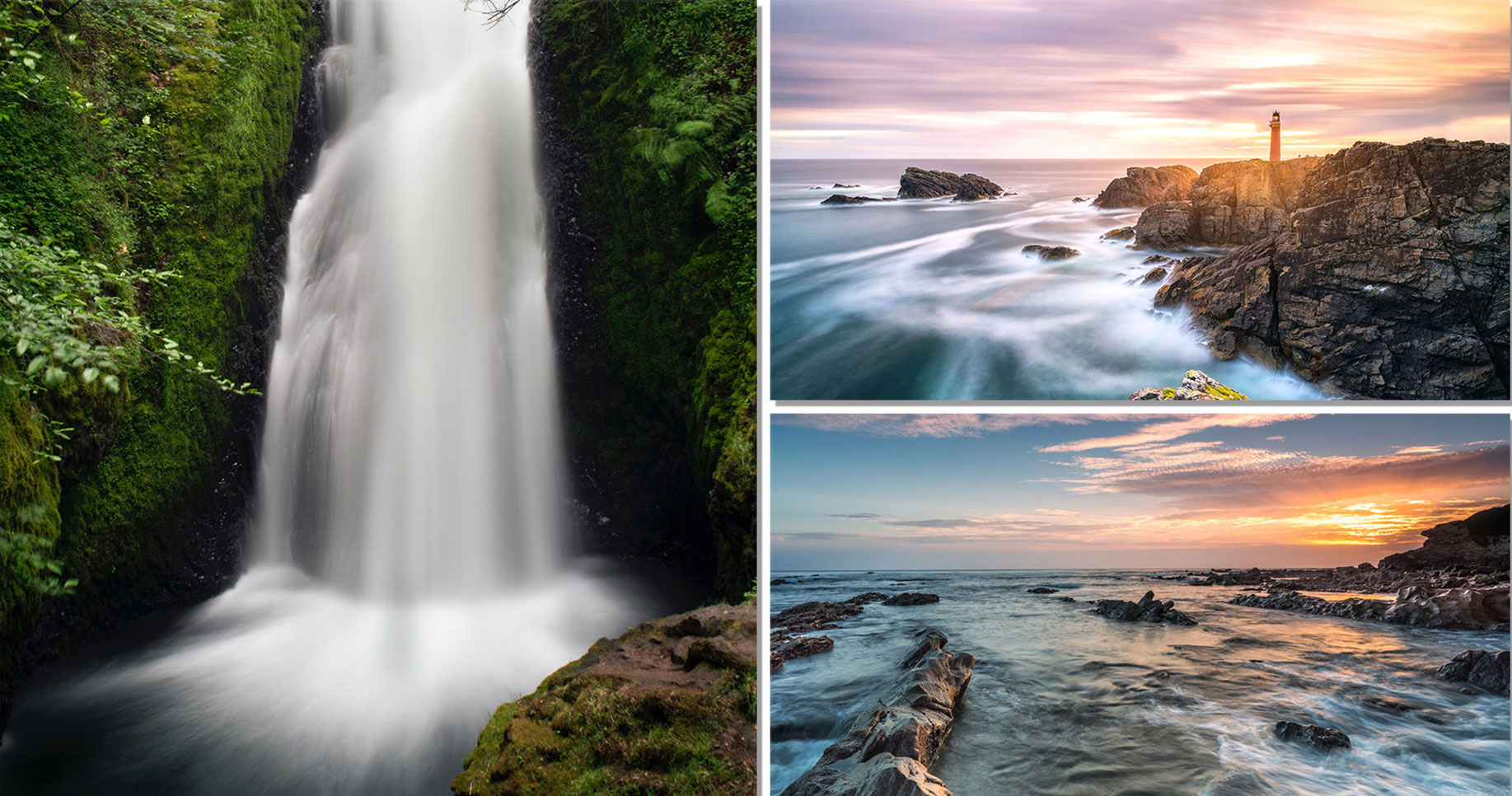
Exposure conversion tip: For each ND stop, double the shutter time. E.g., without ND it's 1/125s; with 6-stop ND it becomes 1/125→1/2 second; with 10-stop it's 8 seconds.
| Shutter Speed | ND8 | ND16 | ND64 | ND1000 |
|---|---|---|---|---|
| 1/32000 | 1/4000 | 1/2000 | 1/500 | 1/30 |
| 1/16000 | 1/2000 | 1/1000 | 1/250 | 1/15 |
| 1/8000 | 1/1000 | 1/500 | 1/125 | 1/8 |
| 1/4000 | 1/500 | 1/250 | 1/60 | 1/4 |
| 1/2000 | 1/250 | 1/125 | 1/30 | 1/2 |
| 1/1000 | 1/125 | 1/60 | 1/15 | 1s |
| 1/500 | 1/60 | 1/30 | 1/8 | 2s |
| 1/250 | 1/30 | 1/15 | 1/4 | 4s |
| 1/125 | 1/15 | 1/8 | 1/2 | 8s |
| 1/30 | 1/4 | 1/2 | 2s | 30s |
| 1/15 | 1/2 | 1s | 4s | 60s |
| 1/8 | 1s | 2s | 8s | 2' |
| 1/4 | 2s | 4s | 16s | 4' |
| 1/2 | 4s | 8s | 32s | 8' |
IV. Fixed ND vs. Variable ND
Fixed ND
Pros:
- Stable image quality, no color cast (quality brands)
- No "X-pattern cross" issue found in variable NDs
- Relatively lower price, more options
Cons:
- Each stop requires a separate purchase, need to swap filters
- Traveling requires carrying multiple filters, cumbersome
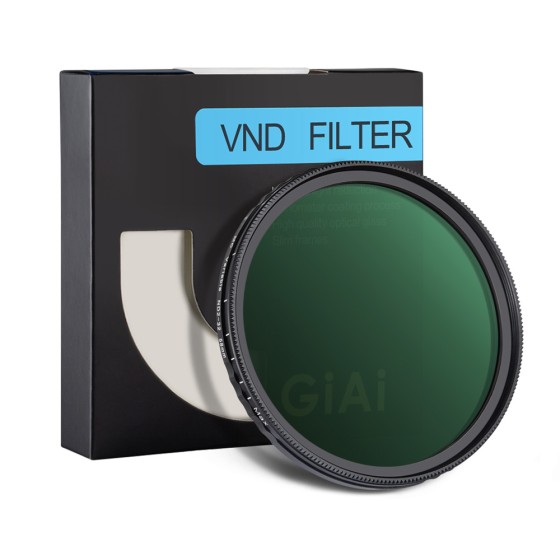
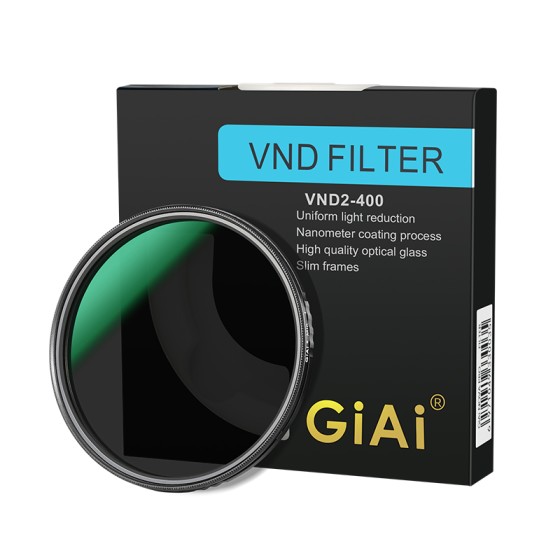
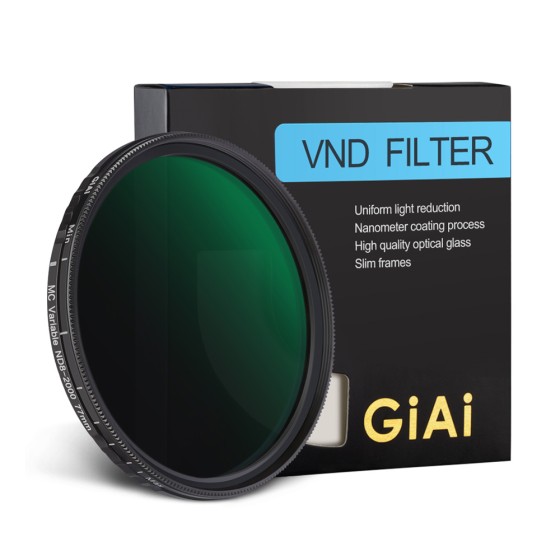
Variable ND (VND)
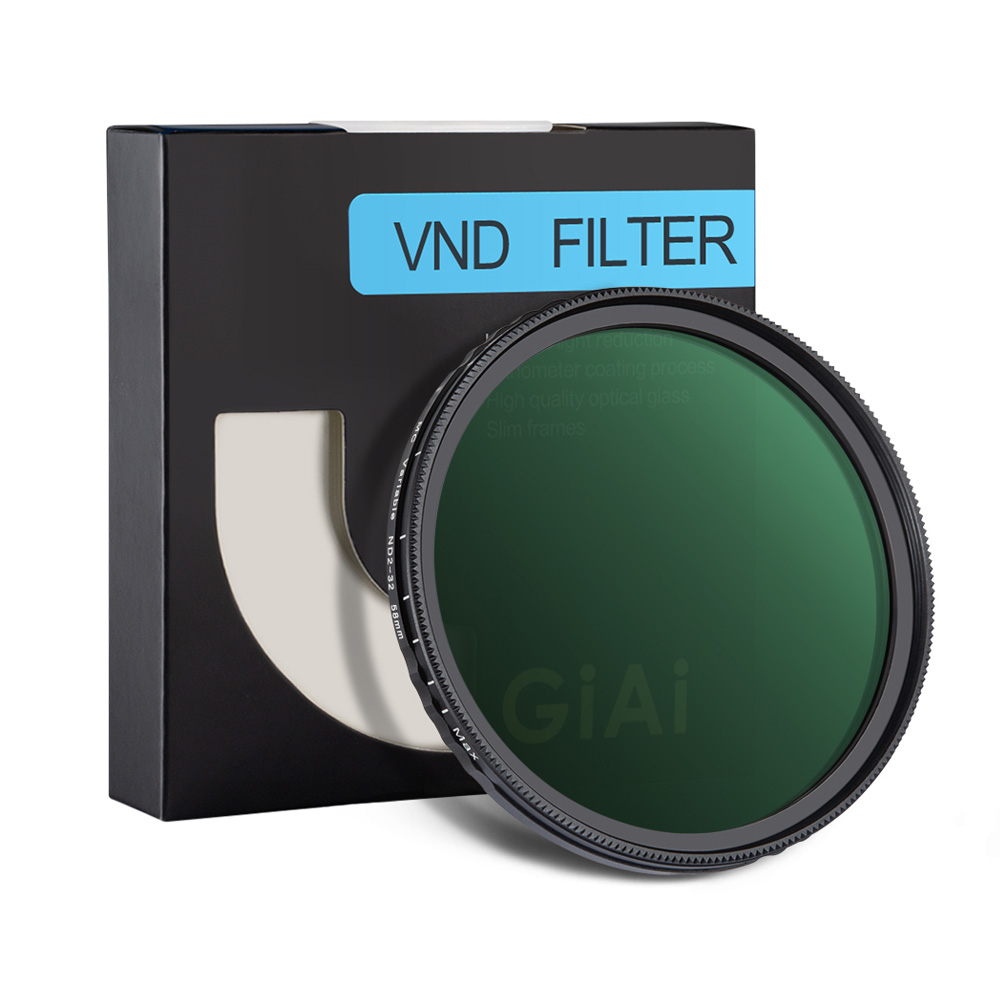
Pros:
- One filter replaces many — adjustable from 2-9 stops with a twist
- Video shooting essential — adjust exposure on the fly without stopping to change filters
- Only one filter to carry, lightweight
Cons:
- Quality no-color-cast VNDs are expensive; cheap ones have noticeable color cast (often yellow/green)
- High reduction settings prone to "X-pattern" (dark cross), ruining the image
- Essentially a polarizer combination — improper rotation angle affects image quality
- Wide angle + high stop settings make X-pattern worse
How to choose?
| Your Situation | Recommendation |
|---|---|
| Video shooting (Vlog, interview, documentary) | Variable ND (choose a reliable brand) |
| Photo long exposure focused | Fixed ND, ND64+ND1000 two-filter combo most practical |
| Adequate budget, love experimenting | Variable ND for video + Fixed ND for landscape |
| Tight budget | Start with fixed ND, avoid cheap variable NDs |
V. Pitfall Avoidance Tips
- 1. Don't buy no-name cheap filters: ND filters seem simple, but poor quality products cause severe color cast and sharpness loss that can't be fixed in post. GiAi ND filters use multi-layer coating, low color cast, excellent quality — a solid choice.
- 2. Only buy Variable NDs from major brands: These are polarizing structure lenses requiring extremely high craftsmanship.
- 3. Check your lens thread size before buying: Look for the Ø value on the lens front (e.g., Ø77mm). If buying square, confirm adapter ring diameter too.
- 4. Long exposure trio: ND + tripod + shutter release cable (or 2-second self-timer). Missing any one could ruin the shot.
- 5. Compose before mounting black mirrors: 10+ stop NDs make the viewfinder go completely black — frame, manual focus, and set parameters before attaching.
Summary
- Shape: Beginner/single lens → circular; multi-lens landscape → square system
- Stops: Video 3-5 stops, water flow 6 stops (ND64), streaking clouds 10 stops (ND1000), midday 15+ stops
- Fixed vs. Variable: Photos → fixed (ND64+ND1000 is the golden combo); video → variable from a reputable brand
Clarify what you shoot most often, and the answer will become clear. Happy shooting stunning long exposures!